India's manufacturing opportunity is moving up the value chain. After building solar module and EV assembly capability over the past decade, the next and arguably more important opportunity lies in power electronics: the inverters, chargers and power conversion systems that convert, control and move electricity between generation, storage, the grid and consumption. At Zenergize, we build solar inverters and EV chargers in India, and this is the layer of the energy transition we think deserves far more attention than it currently gets.
India Has Proven Domestic Demand Creates Manufacturing Ecosystems
The Technology Layer Underneath the Energy Transition
The Opportunity Is Already Enormous
Why Manufacturing Alone Is Not Enough
What Indigenous Capability Actually Means
From Manufacturing in India to Building From India
Why This Matters Strategically
The Opportunity Ahead
Frequently Asked Questions
Over the last decade, India has demonstrated that large domestic demand can create manufacturing ecosystems. Solar deployment created demand for modules. The growth of electric mobility is creating demand for vehicles, batteries and components.
The next opportunity lies one layer deeper: power electronics.
This may not be the most visible part of India's energy transition, but it is one of the most important.
India's installed solar capacity has already reached 164.6 GW as of July 2026, up from just 2.8 GW in 2014. In 2025 alone, India added more than 37 GW of solar capacity. Under PM Surya Ghar, more than 51 lakh households had already adopted rooftop solar by August 2026.
Every one of those systems requires power electronics.
And solar is only one part of the opportunity. Every EV charging network requires chargers. Every Battery Energy Storage System requires a Power Conversion System. Data centres, telecom infrastructure, industrial equipment and modern electrical networks all increasingly depend on power electronics to convert, control and manage electricity.
As India electrifies, the power electronics market expands with it.
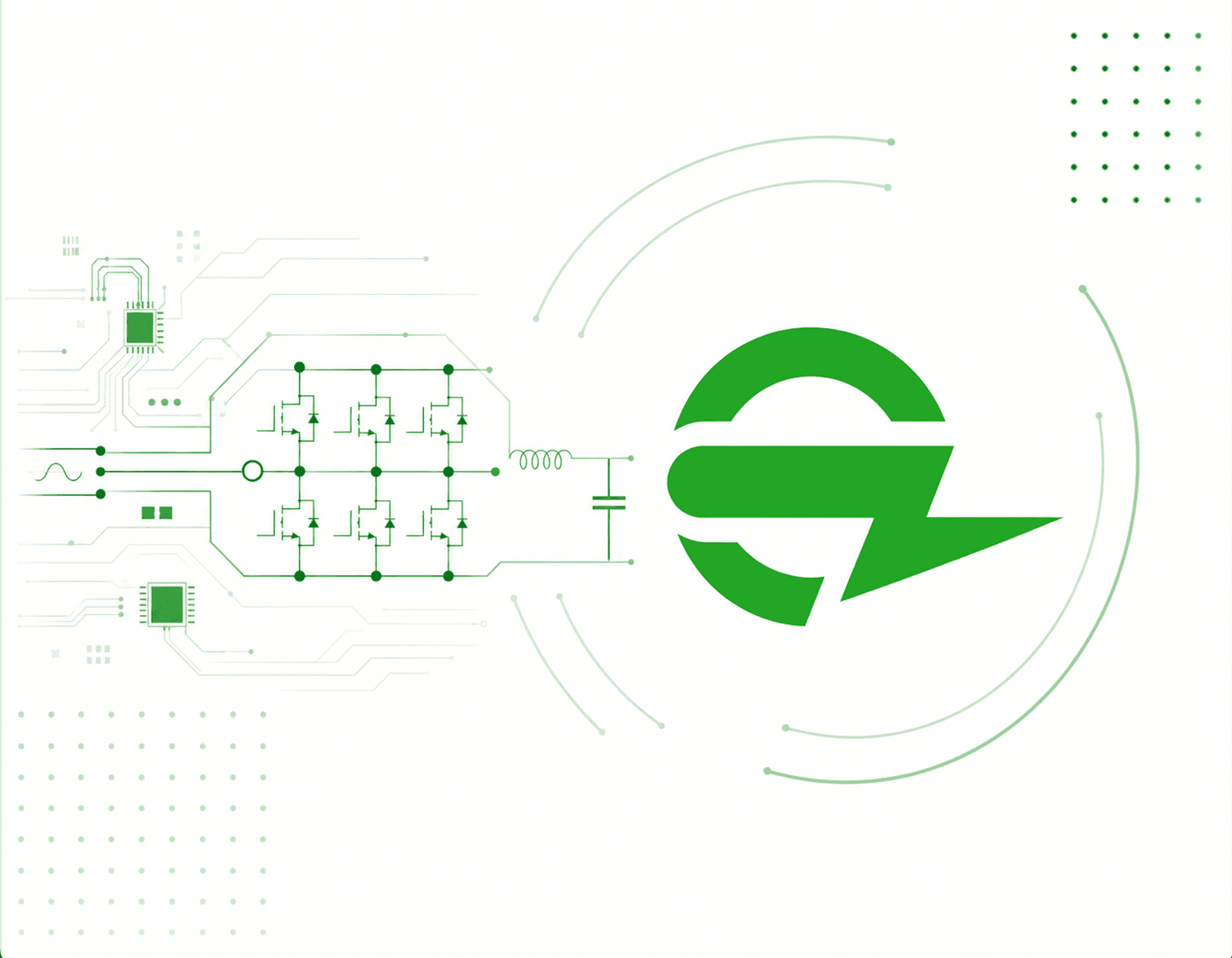
Power electronics is the interface between generation, storage, the grid and consumption.
A solar module generates DC electricity, while the grid requires controlled AC power. A battery stores DC energy, but that energy must be converted and controlled before it can be supplied to the grid. An EV charger has to continuously regulate voltage and current while managing temperature, protection and communication.
This means the product is not simply a collection of components assembled into an enclosure.
Its performance is determined by the engineering inside it: the power-conversion architecture, semiconductor selection, control algorithms, embedded firmware, MPPT and grid synchronisation, protection systems, thermal design, PCB architecture, system integration and product validation.
The real value is in the engineering that sits inside the box. This is what makes power electronics different from many conventional manufacturing opportunities.
The demand for this capability is no longer hypothetical.
India's renewable-energy build-out is creating a rapidly expanding requirement for inverters and grid-interface equipment. EV adoption is creating a parallel requirement for AC and DC charging infrastructure. And energy storage is beginning to create an entirely new layer of demand.
The Government's own projections put India's BESS requirement at 34.72 GWh by 2026–27 and 236.22 GWh by 2031–32. The government has already created a VGF framework supporting around 43,850 MWh of BESS capacity.
The scale of the storage opportunity is also visible in the project pipeline. India's energy-storage tender pipeline was reported at around 260 GWh in 2026, even as domestic lithium-ion cell manufacturing capacity remained only around 2 GWh.
The point is not that India will immediately manufacture every component of this ecosystem. The point is that the demand for the systems that convert and control this electricity is being created at an extraordinary scale.
That creates the foundation for a major manufacturing industry.
India has already built meaningful manufacturing and assembly capability across solar, EVs and electrical equipment.
The next challenge is different.
A product can be manufactured in India while its core technology remains elsewhere. The power stage can be based on an imported reference design. The control board can come from an overseas supplier. Firmware can be licensed. The architecture can be determined by an external technology provider. Local operations can then assemble, test and sell the finished product.
That creates domestic production. But it does not necessarily create indigenous technology capability.
This distinction will become increasingly important as these products become more sophisticated. For India, the objective should therefore move from simply increasing the percentage of local manufacturing to increasing the degree of Indian design, development and technology ownership.
That is the same principle underlying the IDDM framework in defence procurement: the strategic value of a product is not determined only by where it is assembled, but by who owns and controls the critical technology behind it.
For a grid-tied solar inverter, indigenous capability cannot simply mean manufacturing the enclosure or populating a PCB in India. It means having the capability to design and develop the system itself. That includes:
Power-conversion architecture
Control algorithms and firmware
MPPT and grid synchronisation
Protection and fault management
Thermal and mechanical design
PCB and control-board design
System integration
Product validation and reliability testing
The same principle can be extended to EV chargers and BESS.
This does not mean India must manufacture every semiconductor, sensor or passive component domestically. Global supply chains will remain important. A specialised power semiconductor can be sourced from a global technology leader while the Indian company owns the architecture, firmware, controls, thermal design, system integration and manufacturing around it.
That is not a weakness. It is a realistic path to building technological capability.
The objective is not to manufacture everything. It is to own the technology that integrates everything.
This is where the opportunity becomes much larger than import substitution.
If Indian companies own the underlying technology, the domestic market can become a development platform. Products can be designed around Indian conditions: high ambient temperatures, variable grid conditions, local installation practices, tropical environments and specific regulatory requirements.
They can then be validated in India, manufactured at scale and adapted for other markets.
The progression becomes:
Domestic demand → domestic manufacturing → indigenous design and development → technology ownership → global competitiveness → exports.
That is a very different manufacturing model from simply replacing an imported finished product with an assembled Indian one.
It also creates capabilities that compound across industries. An engineer working on inverter controls develops expertise that can be applied to EV chargers. Power-conversion expertise can move into BESS. Thermal engineering, embedded systems, protection, sensing and grid-integration capabilities can move across multiple product categories.
The capability is reusable. The knowledge compounds.
There is another reason power electronics deserves attention.
India's energy transition is creating a much larger installed base of electrical assets that will operate for 10, 15, 20 or even 25 years. The technology embedded in those assets will influence efficiency, reliability, grid stability, maintenance requirements and the ability to integrate future technologies.
If the underlying technology is controlled elsewhere, India remains dependent on external technology providers for a critical part of its energy infrastructure. If the technology is developed and owned domestically, the same deployment creates an industrial capability that can continue to improve, localise and export.
This is therefore not only a manufacturing question. It is a question of technological capability and long-term industrial competitiveness.
India has spent the last decade building the visible infrastructure of the energy transition. The next decade should also focus on building the technology underneath it.
Solar panels, EVs and batteries will remain important manufacturing opportunities. But each of these depends on another layer that receives far less attention: the power electronics that converts, controls and moves electricity between them.
The demand is already here. The manufacturing opportunity is already emerging.
What India now needs is a deliberate shift from assembly to design, from localisation to technology ownership, and from manufacturing for India to building technology from India.
If that transition happens, power electronics can become much more than another manufacturing category. It can become a foundational Indian technology industry, serving the domestic energy transition first and competing globally thereafter.
India's next manufacturing opportunity may not be another product everyone can see. It may be the technology layer that powers all of them.
Written by

Navneet Daga
Co-Founder & CEO at Zenergize. IIT alumni. 16+ years of experience with Accenture, Delhivery, SuperPlum etc. Building India’s first indigenous SiC solar inverter.
View LinkedInFAQ
Related Articles
